
3PL Delivery Coordination: What Should Businesses Ask Before Imports From Peru Arrive?
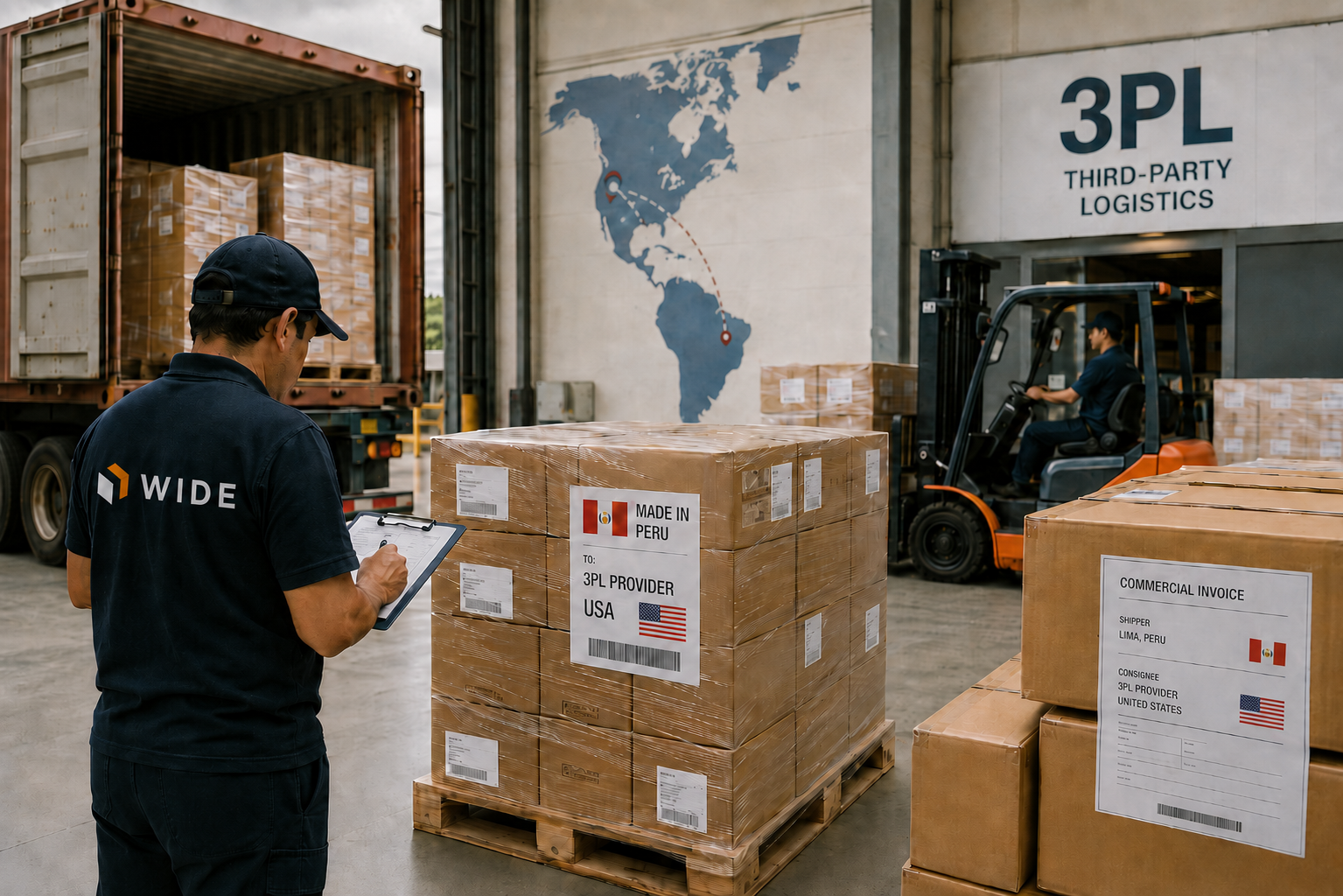
3PL delivery coordination works best when a U.S. business confirms the receiving details before imported goods from Peru or Latin America arrive in the United States.
If a shipment is going to a third-party logistics provider, the importer should not wait until the final delivery stage to clarify where the goods are going, who will receive them, what information the 3PL needs, and how delivery updates should be communicated.
This article focuses specifically on the questions businesses should ask before delivery to a 3PL provider. It is not a general U.S. distribution article, a fulfillment center delivery guide, or a temporary storage article. Instead, it helps importers prepare the 3PL handoff as one specific part of the broader import process.
Why 3PL Delivery Coordination Should Start With the Receiving Process
3PL delivery coordination should begin with the receiving process, not only with the delivery address.
A 3PL provider is not just a final location. It may be part of how the business receives, stores, moves, or prepares imported goods after they arrive in the United States. For that reason, the importer should understand what the 3PL needs before the shipment reaches the final-mile delivery stage.
The first question is simple: what does the 3PL need in order to receive the shipment correctly?
That answer may shape how the delivery is coordinated. The business may need to confirm the correct receiving location, contact person, delivery timing, shipment details, and any instructions the 3PL wants shared before the goods arrive.
Clarifying this early helps connect logistics and freight coordination with the actual receiving process in the United States.
What Information Should the Business Confirm With Its 3PL?
Before imported goods are delivered to a 3PL provider, the business should confirm the information that will guide the handoff.
Useful questions include:
-Does the 3PL have the correct receiving address?
-Who is the receiving contact?
-When can the location receive the shipment?
-Does the 3PL need advance notice before delivery?
-What shipment details should be shared before arrival?
-Does the 3PL need specific documentation or reference information?
-Should delivery updates be shared with the 3PL, the importer, or both?
These questions help the business avoid treating delivery to the 3PL as a vague final step. The goal is to make sure the shipment, contact points, timing, and receiving expectations are clear before the goods are already moving toward the destination.
This is especially useful for small businesses, entrepreneurs, specialty retailers, food product distributors, and importers without an internal logistics team.
How 3PL Questions Connect With Documentation and Import Planning
The questions asked before delivery to a 3PL provider should stay connected to the broader import process.
When importing from Peru to the U.S., the shipment may involve supplier coordination, logistics and freight coordination, shipping documents, customs and import compliance, and U.S. distribution and delivery. If those parts are handled separately, the final handoff can become harder to follow.
For example, the 3PL may need to understand what type of goods are arriving, how the shipment is organized, when delivery is expected, and what information should be available before receiving. At the same time, the importer may need clarity on shipping documents, customs-related details, and delivery updates before the goods reach the 3PL location.
A stronger approach connects the import path from the beginning. The shipment should not only move from Peru to the United States; it should move toward a receiving location that is prepared to accept it.
Why Communication Matters Before the 3PL Handoff
Communication matters because delivery to a 3PL provider can involve several parties.
The process may include the U.S. business, the supplier in Peru or Latin America, logistics contacts, customs-related partners, freight carriers, and the 3PL receiving team. If information is not clear, the business may know that goods are moving but still not know whether the 3PL has what it needs to receive them.
Delivery updates can help answer practical questions: where the shipment is, when delivery is expected, and who should be contacted if something changes.
Bilingual import support can also help when the process involves English-speaking and Spanish-speaking partners. Clear communication in both languages can make it easier to align product information, shipping updates, customs documents, and final delivery expectations.
Final Thoughts
3PL delivery coordination should be prepared before imported goods from Peru or Latin America arrive in the United States.
The most important step is not only choosing a 3PL provider. It is confirming what that 3PL needs before receiving the shipment. Businesses should clarify the receiving address, contact person, delivery timing, shipment details, documentation needs, update process, and final handoff expectations.
When these questions are answered early, the 3PL handoff becomes easier to coordinate as part of the full import process. Supplier coordination, logistics and freight coordination, customs and import compliance, bilingual communication, and U.S. distribution and delivery can work together instead of being handled as disconnected steps.
If your business is importing products from Peru or Latin America and needs support coordinating delivery to a 3PL provider in the United States, WIDE can help you organize the process with more clarity.
Contact WIDE to discuss your product, shipment details, documentation questions, 3PL receiving information, delivery expectations, and communication needs. Our bilingual team can help you build a clearer path from logistics planning to final U.S. delivery.