
Importing From Peru to the U.S. for a Product Launch: What Should Businesses Plan?
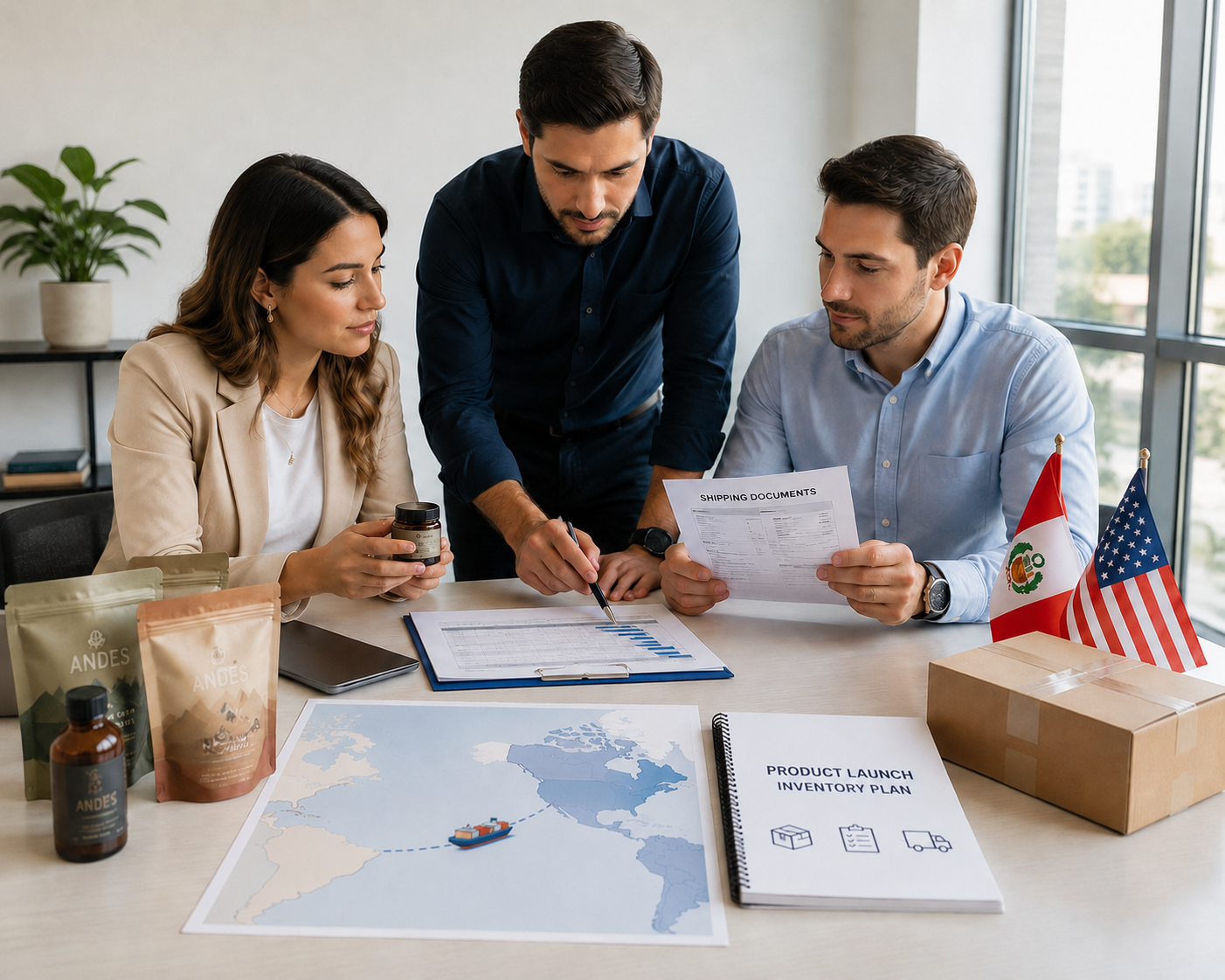
Importing from Peru to the U.S. for a product launch requires more than choosing a product and placing an order.
For small businesses, entrepreneurs, specialty retailers, and growing brands, a launch depends on clear product specifications, realistic quantity planning, supplier coordination, shipping estimates, documentation, customs-related review, and final delivery in the United States.
This article focuses specifically on launch planning. It is not only about placing a first order or managing a standard import shipment. It is about helping a business think through what should be clarified before bringing launch inventory from Peru or Latin America into the U.S. market.
Why Importing From Peru to the U.S. for a Product Launch Needs a Clear Sourcing Plan
Importing from Peru to the U.S. for a product launch should begin with a clear sourcing plan.
Before supplier research begins, the business should define what product it wants to launch, what specifications matter, what quantity is being considered, and what timeline the launch depends on. These details help turn a general product idea into a more practical sourcing conversation.
This is especially important because WIDE’s custom sourcing approach is not based on handing clients a fixed catalog. WIDE listens to the business need and sources directly based on product specs, quantities, and timelines.
For a product launch, that clarity matters. A business may be preparing a new product line, testing demand, stocking a specialty retail location, or building initial inventory for a new sales channel. Each scenario may require a different conversation around product details, supplier options, lead times, shipping estimates, and final destination.
The clearer the sourcing request is, the easier it becomes to connect the product idea with the next steps in the import process.
What Businesses Should Clarify Before Launch Inventory Is Ordered
Before ordering launch inventory, businesses should clarify the details that can affect sourcing and import coordination.
The most important starting points are the product type, product specifications, estimated quantity, preferred launch window, supplier expectations, packaging or labeling considerations, and final U.S. destination.
Quantity is especially important. A sample shipment, a small initial order, and a larger launch order may each require a different planning conversation. The business should also consider whether the first shipment is meant to test the market, prepare a limited release, supply a storefront, support a distributor, or prepare inventory for a broader rollout.
Timing should also be reviewed early. WIDE’s sourcing process includes supplier research, supplier confirmation, pricing, lead times, shipping estimates, and coordination from factory to final destination. For a launch, these steps should be considered before the business commits to a public launch window or internal sales deadline.
The goal is not for the business owner to manage every operational detail alone. The goal is to organize enough information so the sourcing and import path can be reviewed with more clarity.
How Logistics and Compliance Support a Product Launch
A product launch does not end once a supplier has been identified.
After the product direction and supplier details are clearer, the business still needs to consider how the goods will move from Peru or Latin America to the United States. This may involve logistics and freight coordination, shipping documents, customs-related support, and final delivery planning.
WIDE’s logistics support includes air and ocean freight coordination, port-to-door service, customs and documentation support, and flexible delivery options once goods arrive in the United States. Its customs and import compliance support also includes customs clearance, regulatory compliance, HS codes and duties, and labeling or packaging guidance.
For a product launch, these steps matter because the inventory must be prepared, shipped, reviewed, and delivered in a way that fits the business plan. A product may also require different documentation or compliance considerations depending on whether it is a food product, raw material, general merchandise, textile, packaged good, or specialty item.
A stronger launch plan connects sourcing, freight, documentation, customs-related review, and U.S. delivery from the beginning. This helps the business understand what information should be ready before the shipment moves forward.
Why Final Delivery Should Be Part of the Launch Plan
U.S. distribution and delivery should be part of the product launch conversation from the beginning.
Once goods clear customs, they still need to reach the correct U.S. destination. That destination may be a storefront, warehouse, fulfillment center, retail location, business address, or 3PL provider.
For a product launch, the delivery destination can affect how the business prepares to receive, store, display, distribute, or sell the inventory. If the final destination is not clear early, the business may still have unresolved decisions after the shipment has already arrived in the United States.
The business should clarify where the launch inventory needs to go, who will receive it, whether delivery timing matters, and whether warehousing, temporary storage, fulfillment coordination, or flexible delivery scheduling may be needed.
Bilingual import support can also be useful when the process involves suppliers, logistics contacts, customs-related partners, and U.S.-based decision makers. WIDE operates in English and Spanish, which helps keep communication clearer across both sides of the import process.
Final Thoughts
Importing from Peru to the U.S. for a product launch works best when the business plans the full path early.
A strong launch plan should connect the product request, specifications, supplier coordination, quantity expectations, timeline, logistics, customs and import compliance, and U.S. distribution and delivery. Each stage affects the next, so the process should not be treated as a set of disconnected tasks.
For U.S. businesses preparing to launch a new product line, the most useful starting point is clarity. The clearer the product, quantity, timeline, documentation needs, and final destination are, the easier it becomes to build a practical import plan from Peru or Latin America to the United States.
If your business is planning a product launch and wants to source products from Peru or Latin America, WIDE can help you organize the process with more clarity.
Contact WIDE to discuss your product idea, specifications, quantity expectations, launch timeline, sourcing needs, import coordination questions, and final U.S. delivery destination. Our bilingual team can help you build a clearer path from custom sourcing to product launch in the United States.