
Multi-Point Drop-Offs for Imported Goods From Peru: How to Plan Delivery to Multiple U.S. Locations
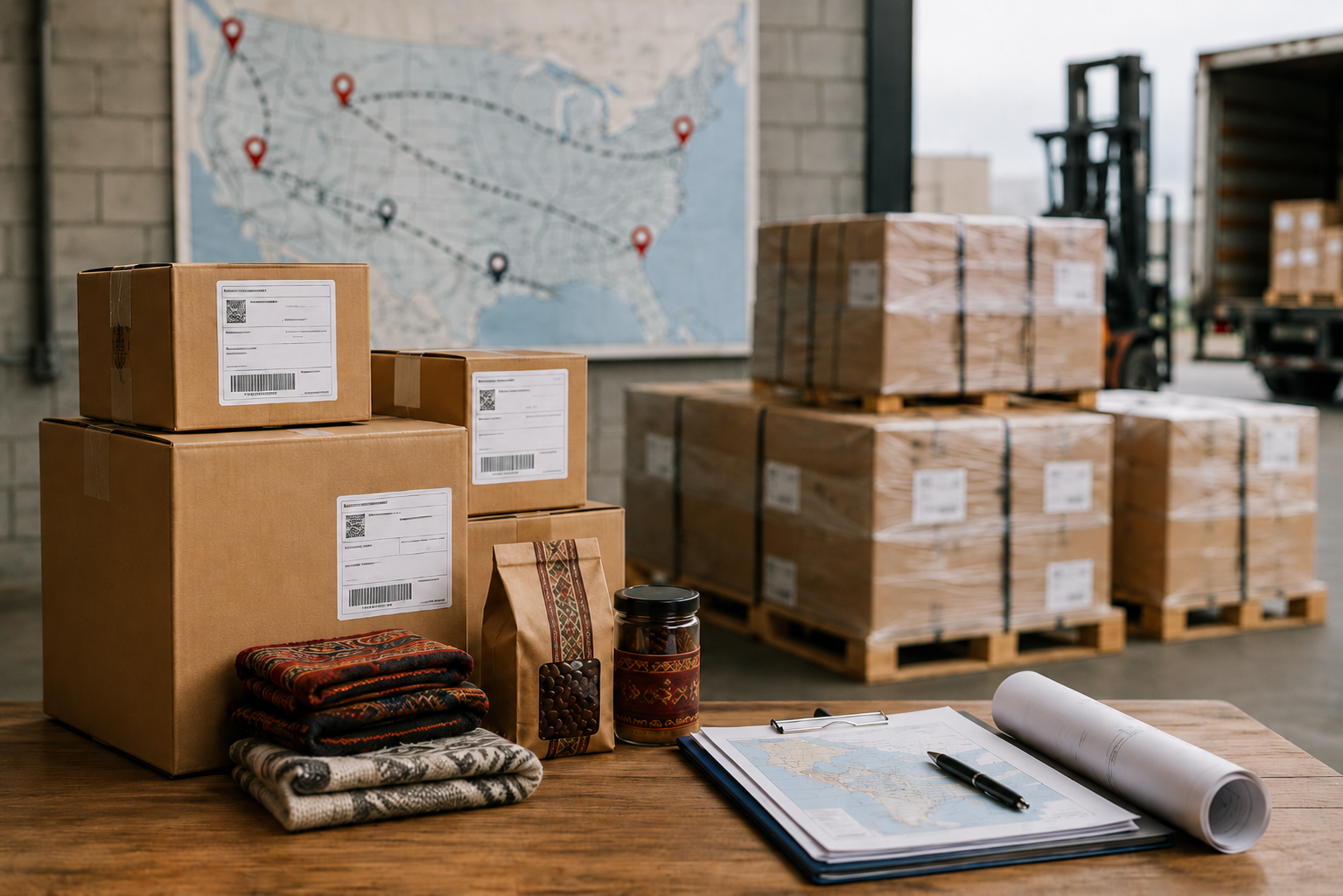
Multi-point drop-offs for imported goods can help businesses that need one shipment from Peru or Latin America delivered to more than one location in the United States.
For some importers, the final destination is not a single warehouse, storefront, or fulfillment center. Products may need to be divided across different retail locations, business addresses, storage points, or distribution partners depending on how the company plans to sell, store, or move inventory after arrival.
That is why delivery to multiple U.S. locations should be planned before the shipment reaches the final stage. When the destinations, quantities, timing, and receiving details are clear early, U.S. distribution and delivery can be coordinated with fewer unanswered questions.
Why Multi-Point Drop-Offs for Imported Goods Should Be Planned Early
Multi-point drop-offs for imported goods should not be treated as a last-minute delivery decision.
Once a shipment arrives in the United States and clears customs, the final leg of the process begins. If the goods need to move to more than one destination, the business should already understand where each portion of the shipment is going, who will receive it, and whether each location has different delivery needs.
This matters because a shipment may be coordinated properly from Peru or Latin America to the U.S., but still become difficult to manage if the final delivery plan is unclear. A business may have two stores, a warehouse and a retail location, or several business addresses that need different quantities of the same shipment.
Planning early helps make the final stage more organized. Instead of deciding after arrival where the goods should go, the business can connect final-mile delivery coordination with the broader import plan from the beginning.
What Businesses Should Clarify Before Delivery to Multiple U.S. Locations
Before arranging delivery to multiple U.S. locations, businesses should clarify the details that shape the delivery plan.
The most important starting points are the number of delivery locations, the full addresses, the receiving contacts, the quantity going to each destination, the expected delivery timing, and any specific receiving instructions.
For example, one location may be ready to receive goods immediately, while another may need a later delivery window. One destination may be a warehouse with regular receiving hours, while another may be a storefront that needs a more specific delivery appointment.
Businesses should also clarify whether the shipment should be divided after arrival or whether the delivery plan needs to be considered earlier in the coordination process. The goal is to make sure the final movement of goods is not left unclear once the products are already in the United States.
A stronger delivery plan gives the business more visibility into where the goods are going and what each receiving location needs before final handoff.
How Final-Mile Delivery Coordination Supports Multi-Point Drop-Offs
Final-mile delivery coordination helps connect international importing with the practical movement of goods inside the United States.
When importing from Peru to the U.S., the process may include sourcing, logistics and freight coordination, customs-related support, and final delivery. Multi-point drop-offs add another layer to that final stage because the shipment does not end at one destination.
This is where destination details become especially important. The business should know whether the goods are going to retail locations, warehouses, business addresses, fulfillment partners, or a combination of destinations.
Clear delivery instructions help the final-mile process stay connected to the business need. Instead of treating delivery as a single endpoint, the shipment can be planned around the actual way the business needs to receive and distribute its products in the U.S.
For small businesses, entrepreneurs, e-commerce brands, specialty retailers, and distributors, this type of coordination can make the post-arrival stage easier to understand and easier to manage.
Why Multi-Point Delivery Should Stay Connected to the Full Import Plan
Multi-point delivery works best when it is connected to the full import plan.
A business may begin by sourcing products from Peru or Latin America, but the process does not stop with finding the supplier or arranging international freight. The goods still need to move through the right coordination steps and reach the correct U.S. destinations after arrival.
That means the final delivery plan should be discussed alongside quantity, timing, shipment destination, receiving needs, and business goals. If the business knows early that products need to be delivered to multiple locations, that information can help shape a clearer import path.
Bilingual import support can also be useful when communication involves suppliers, logistics contacts, receiving locations, and U.S.-based decision makers. When information is clear in English and Spanish, businesses can follow the process with more confidence across each stage.
A stronger import plan does not only ask how goods will enter the United States. It also asks where they need to go after arrival and how each delivery point should be coordinated.
Conclusion
Multi-point drop-offs for imported goods can help businesses distribute imported products to more than one U.S. location after arrival.
Before moving forward, businesses should clarify the delivery locations, addresses, receiving contacts, quantity per destination, timing expectations, and any location-specific instructions. These details help make the final stage of the import process clearer and easier to coordinate.
For businesses importing from Peru to the U.S., the strongest approach is to connect final-mile delivery with the full import plan. Sourcing, freight coordination, customs-related support, and U.S. distribution should work together instead of being handled as separate steps.
If your business is importing products from Peru or Latin America and needs delivery to multiple U.S. locations, WIDE can help you organize the final stage with more clarity.
Contact WIDE to discuss your product, shipment details, delivery locations, receiving contacts, timing needs, and import support requirements. Our bilingual team can help you build a clearer path from sourcing to customs coordination and final delivery in the United States.