
Port-to-Door Delivery From Peru to the U.S.: What Should Businesses Clarify Before Final Delivery?
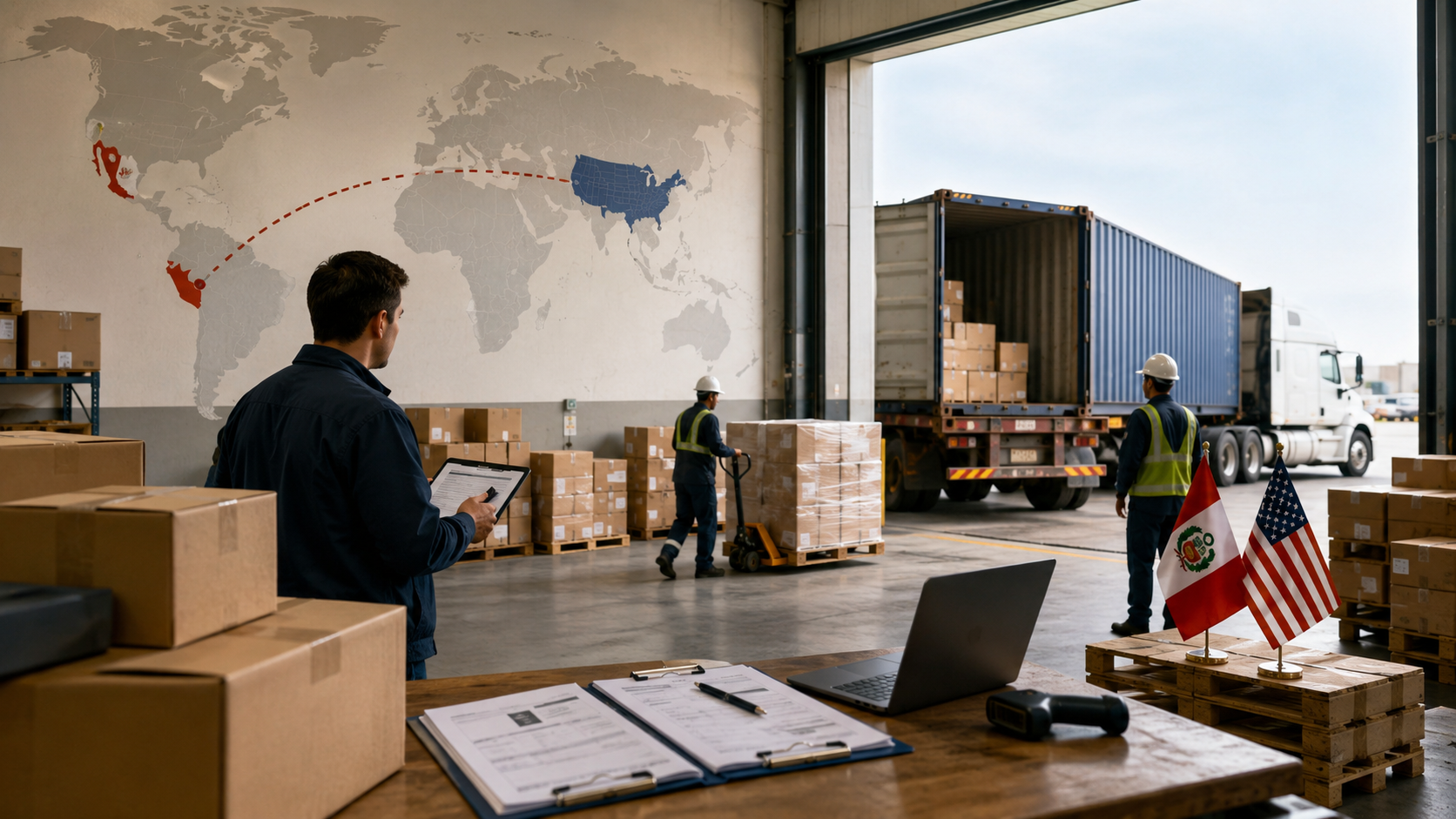
Port-to-door delivery from Peru to the U.S. helps businesses connect international freight coordination with the final step of receiving goods at the right U.S. destination.
This article focuses specifically on the port-to-door stage: how goods move from supplier handoff and arrival coordination toward the final business destination in the United States. It is not a general shipping guide. Instead, it explains what businesses should clarify so the final delivery plan is connected to the broader import process from the beginning.
For U.S. businesses importing from Peru or Latin America, that clarity can make the process easier to understand. The shipment may involve supplier coordination, freight planning, customs and documentation support, and final delivery to a warehouse, storefront, fulfillment center, business location, or 3PL provider.
Why Port-to-Door Delivery From Peru to the U.S. Should Be Planned Early
Port-to-door delivery from Peru to the U.S. should be planned before the shipment is already moving toward its final destination.
A business may focus first on the product, supplier, quantity, and shipping method. However, the shipment still needs a clear delivery path once it moves through the import process and reaches the United States. If the final destination is not defined early, the business may still have unresolved questions when the goods are ready for inland delivery.
Planning early helps connect logistics and freight coordination with the actual way the business needs to receive its products. A shipment going to a warehouse may require different delivery details than a shipment going to a storefront, fulfillment partner, or 3PL provider.
This is especially important for small businesses, entrepreneurs, specialty retailers, and importers without an internal logistics team. The goal is not only to move goods across borders, but to make sure the final delivery stage is clear, coordinated, and aligned with the business need.
What Businesses Should Clarify Before Final Delivery
Before arranging port-to-door service, businesses should organize the details that shape the final delivery plan.
The most useful starting points include the product type, shipment quantity, supplier location, expected readiness date, preferred shipping timeline, final U.S. destination, receiving contact, and delivery instructions. These details help connect supplier handoff, freight coordination, customs-related steps, and U.S. distribution and delivery.
The final destination should be specific. A business should clarify whether the goods are going to a warehouse, storefront, fulfillment center, business address, retail location, or 3PL provider. It should also identify who will receive the shipment and whether the destination has receiving hours, appointment requirements, access instructions, or timing limitations.
This information helps avoid treating final delivery as a last-minute decision. When the delivery point is clear early, the shipment can be reviewed as one connected path instead of a set of separate steps.
How Port-to-Door Delivery Connects With Customs and Documentation Support
Port-to-door delivery should stay connected to customs and documentation support.
When importing from Peru to the U.S., the movement of goods is only one part of the process. Businesses may also need to prepare shipping documents, organize product information, review customs-related requirements, and understand how documentation can affect the movement of goods toward final delivery.
This is why the final delivery plan should not be separated from the broader import process. If shipment details, documentation, or destination information are incomplete, the business may face more confusion once the goods are already in motion.
A stronger approach connects supplier coordination, logistics and freight coordination, customs and documentation support, and U.S. distribution and delivery from the beginning. This gives the business a clearer view of what information should be ready before the shipment moves forward.
Why the Final U.S. Destination Matters in Port-to-Door Service
The final U.S. destination is one of the most important details in port-to-door service.
Once goods reach the United States, they still need to arrive at the location where the business can receive, store, sell, distribute, or process them. That location may be a warehouse, storefront, fulfillment center, 3PL provider, or another business address.
Each destination can have different receiving needs. A warehouse may have regular receiving hours. A storefront may need a more specific delivery window. A fulfillment center or 3PL provider may require clearer receiving instructions before the shipment arrives.
Bilingual import support can also help when the process involves suppliers in Peru or Latin America, logistics contacts, customs-related partners, and U.S.-based decision makers. Clear communication in English and Spanish can help businesses follow the process with fewer misunderstandings from supplier coordination to final delivery.
Final Thoughts
Port-to-door delivery from Peru to the U.S. helps businesses connect international freight coordination with the final destination where imported goods need to arrive.
Before moving forward, businesses should clarify the product, quantity, supplier information, shipment timing, customs and documentation needs, final U.S. destination, receiving contact, and delivery instructions. These details help make the final delivery stage clearer and easier to coordinate.
For businesses importing from Peru or Latin America, the strongest approach is to plan the full path early. Supplier handoff, freight coordination, customs-related support, and U.S. distribution and delivery should work together instead of being handled as disconnected steps.
If your business is planning port-to-door delivery from Peru or Latin America to the United States, WIDE can help you organize the process with more clarity.
Contact WIDE to discuss your product, supplier information, shipment details, documentation questions, final U.S. destination, receiving contact, and delivery needs. Our bilingual team can help you build a clearer path from logistics coordination to customs-related support and final delivery in the United States.