
Storefront Delivery for Imported Goods From Peru: What Should Retail Businesses Prepare?
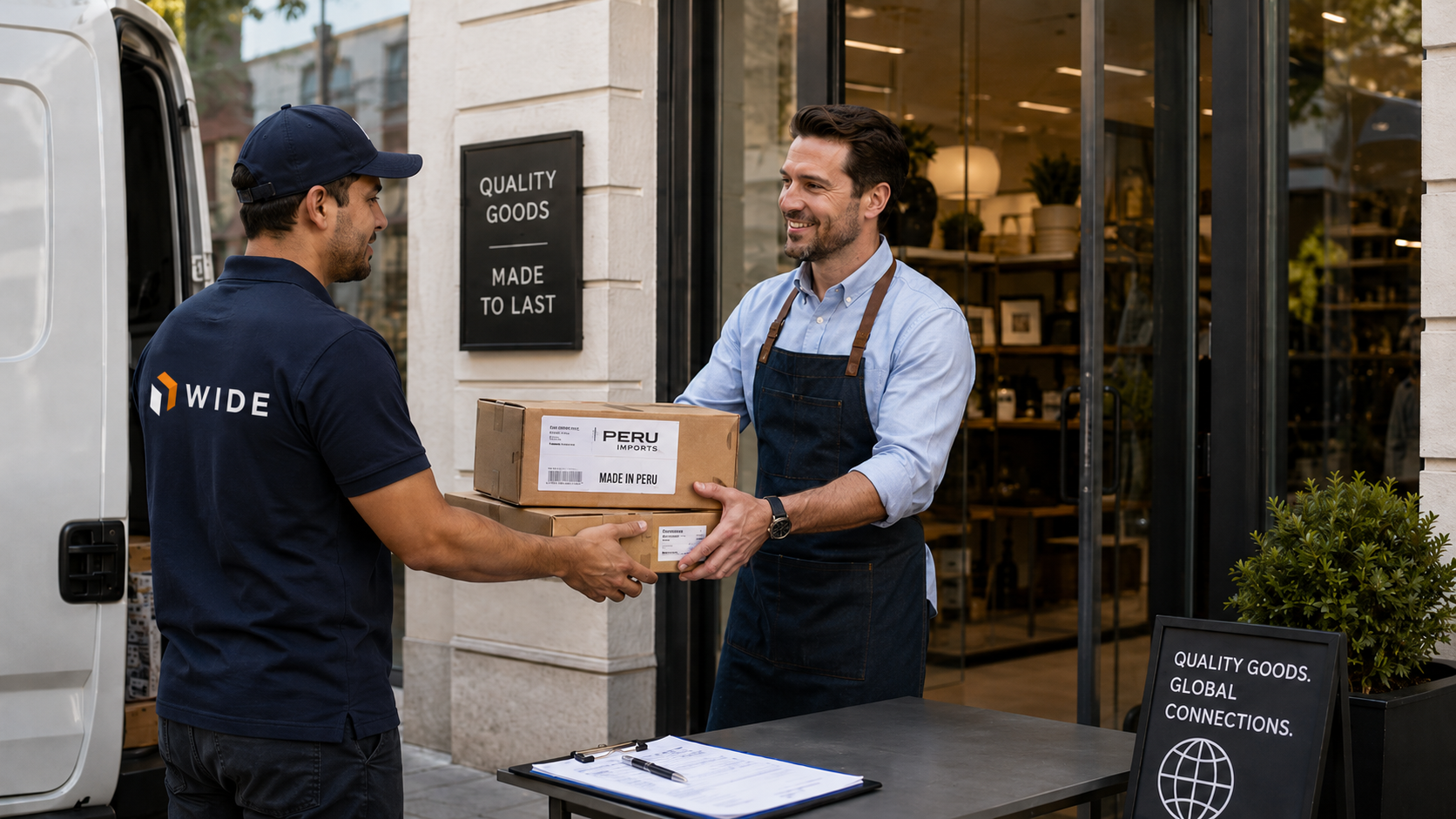
Storefront delivery for imported goods should be planned as part of the full import process, not only as the final step after products arrive in the United States.
When a retail business is importing from Peru to the U.S., the process may involve sourcing, shipping, documentation, customs-related review, bilingual communication, and final U.S. delivery. Wide’s website presents this process as a connected path, from helping businesses source products in Peru and Latin America to making sure those products reach their final destination in the United States.
This article focuses specifically on delivery to a storefront or retail location. It is not a warehouse delivery article, a fulfillment center guide, a 3PL coordination article, a temporary storage article, or a port-to-door overview. Instead, it explains what retail businesses should clarify when imported goods need to arrive directly at a customer-facing business location.
Why Storefront Delivery for Imported Goods Should Be Planned Early
Storefront delivery for imported goods should be considered before the shipment is already moving toward the final U.S. destination.
Wide’s U.S. distribution and delivery service is built around helping products reach the destination where the business needs them to arrive, whether that destination is a warehouse, storefront, or fulfillment center. For a retail business, this means the storefront should be part of the planning conversation from the beginning.
The business should not only think about the product, supplier, shipping option, or customs-related documents. It should also clarify where the goods need to arrive, who will receive them, and how delivery information should be communicated before the final handoff.
Planning early helps connect logistics and freight coordination with the real destination of the shipment. The goal is to make sure storefront delivery is treated as part of the import path, not as a disconnected step after shipping and documentation have already been reviewed.
What Storefront Delivery Details Should Be Clarified?
Before delivery to a storefront, the business should organize the information that helps define the final handoff.
The most useful details include the complete storefront address, receiving contact, delivery destination, shipment details, product quantity, packaging information, and any delivery instructions the business wants reviewed before arrival.
These details matter because Wide’s logistics support is based on coordination. Its website explains that the process may include shipping documents, customs-related information, shipment updates, delivery timing, and contact points. A storefront delivery plan should therefore give the support team enough information to understand where the goods are going and who should be involved when delivery is expected.
This does not mean the business needs to manage every logistics detail alone. It means the business should provide clear destination and receiving information so the import process can move with fewer communication gaps.
How Storefront Delivery Connects With Documentation and Import Planning
Storefront delivery should stay connected to documentation and import planning.
When importing from Peru or Latin America to the United States, Wide’s logistics and freight coordination includes support with shipping documents such as commercial invoices and packing lists, as well as customs-related areas such as HS codes, import regulations, duties, and U.S. import compliance standards.
For this reason, the final destination should not be treated separately from the earlier stages of the import process. Product information, shipment details, documentation, customs-related review, freight coordination, and final delivery all work better when they are reviewed as part of one connected path.
A retail business should clarify the storefront destination early so the delivery plan can stay aligned with the broader import process. This helps the business understand how sourcing, logistics, customs and import compliance, and U.S. distribution and delivery relate to one another before the goods arrive.
Why Bilingual Communication Matters Before the Storefront Handoff
Clear communication is important when imported goods are being delivered to a storefront.
Wide’s website emphasizes bilingual support in English and Spanish, which is relevant when the process involves U.S.-based businesses, suppliers in Peru or Latin America, logistics contacts, customs-related partners, and delivery coordination in the United States.
For storefront delivery, communication should help clarify where the shipment is, when delivery is expected, who should be contacted if something changes, and what information the business needs before receiving the goods. These are the same types of updates Wide identifies as part of its logistics support.
Bilingual import support can help reduce confusion when information moves between English-speaking and Spanish-speaking partners. This is especially useful for retail businesses that want to import products from Peru or Latin America but need a clearer way to follow the process from supplier coordination to final U.S. delivery.
Final Thoughts
Storefront delivery for imported goods should be prepared as part of the full import process.
Before moving forward, U.S. retail businesses should clarify the storefront address, receiving contact, shipment details, product quantity, packaging information, documentation questions, delivery expectations, and communication process. These details help connect importing from Peru to the U.S. with logistics and freight coordination, customs and import compliance, bilingual support, and U.S. distribution and delivery.
When the storefront destination is clear from the beginning, the final handoff becomes easier to understand and coordinate.
If your business is importing products from Peru or Latin America and needs delivery to a storefront or retail location in the United States, WIDE can help you organize the process with more clarity.
Contact WIDE to discuss your product details, shipment information, documentation questions, final U.S. destination, receiving contact, delivery expectations, and bilingual communication needs. Our team can help connect your import process with a clearer path toward storefront delivery in the United States.