
Supplier Lead Times From Peru: What Should U.S. Businesses Clarify Before Importing?
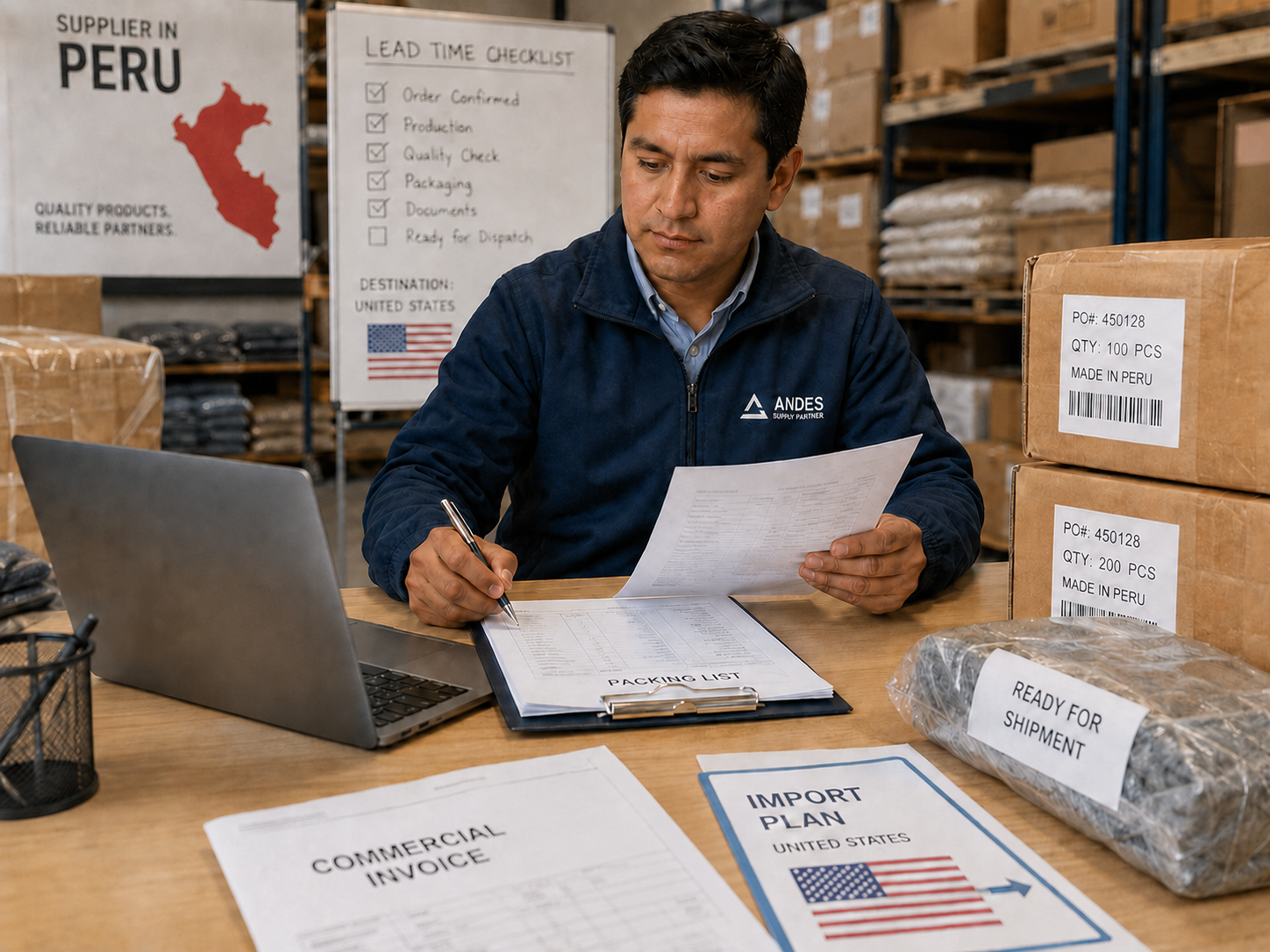
Supplier lead times from Peru can affect how clearly a U.S. business plans its import process before products are ready to move.
When a company is importing from Peru to the U.S., timing is not only about air freight, ocean freight, customs clearance, or final delivery. Before any shipment can move, the supplier usually needs to confirm product availability, preparation needs, packaging expectations, quantity, and readiness dates.
This article focuses specifically on supplier lead times before goods leave Peru. It is not a general shipping timeline article, a product launch guide, or a supplier comparison checklist. Instead, it explains what businesses should clarify with the supplier so sourcing, logistics, documentation, customs-related review, and U.S. delivery can be planned with more clarity.
Why Supplier Lead Times From Peru Should Be Clarified Early
Supplier lead times from Peru should be discussed before the business builds its import timeline.
A product may be available immediately, require preparation, need production time, depend on a minimum quantity, or require packaging before it can be handed off for shipment. If the business only focuses on transportation time, it may overlook the time needed before the goods are actually ready to move.
This matters because supplier readiness is connected to the rest of the import process. Logistics and freight coordination cannot be reviewed clearly if the product readiness date is uncertain. Documentation can also depend on accurate product details, quantities, supplier information, and shipment preparation.
Clarifying supplier lead times early helps the business avoid treating the import timeline as a guess. Instead, the company can understand what needs to happen before shipping, customs-related steps, and final U.S. delivery are coordinated.
What Details Can Affect Product Readiness?
Product readiness depends on the type of product, the order size, the supplier’s preparation process, and the information the business provides.
Before moving forward, U.S. businesses should clarify the product type, specifications, quantity, intended use, packaging expectations, preferred timeline, and whether the order is a sample, first order, reorder, or larger commercial shipment.
A small test shipment may require a different preparation conversation than a recurring order. A product with specific packaging needs may require more coordination than a standard bulk item. A custom-requested product may also require more review before the supplier can confirm availability or preparation timing.
The goal is not for the business owner to manage every supplier detail alone. The goal is to provide enough information so the sourcing request can be reviewed with a realistic understanding of when the product may be ready.
How Supplier Lead Times Connect With Logistics and Import Planning
Supplier lead times should stay connected to the broader import plan.
Once the supplier confirms product readiness, the business can better understand how the shipment may move from Peru or Latin America to the United States. That process may involve logistics and freight coordination, shipping documents, customs and import compliance support, and final delivery planning.
If supplier timing is unclear, the rest of the process can become harder to organize. Freight coordination may be reviewed too early, delivery expectations may be unrealistic, or the business may not know when to prepare its receiving location in the United States.
A stronger approach connects supplier readiness with the next steps in the import path. Product preparation, documentation, freight coordination, customs-related review, and U.S. distribution and delivery should not be treated as disconnected decisions.
Why Clear Communication Helps Keep the Timeline Realistic
Clear communication is important because supplier lead times can involve several people and stages.
A U.S. business may need updates from a supplier in Peru, a logistics contact, customs-related partners, freight carriers, and the final receiving location in the United States. If communication is unclear, the business may know that an order is moving forward but still not understand when the goods will actually be ready.
Bilingual import support can make this easier when information needs to move between English and Spanish. A supplier may explain readiness, preparation details, or timing in Spanish, while the U.S.-based buyer or receiving team may need that information in English.
When communication is clear across both languages, the business can better understand what is confirmed, what is still pending, and what timing expectations should be reviewed before the shipment moves forward.
Final Thoughts
Supplier lead times from Peru should be clarified before a business builds its import plan.
Before moving forward, U.S. businesses should understand product readiness, supplier preparation needs, order quantity, packaging expectations, documentation considerations, preferred timing, and final U.S. destination. These details help connect custom sourcing from Peru with logistics and freight coordination, customs and import compliance, and U.S. distribution and delivery.
A clearer supplier timeline gives the business a better starting point. Instead of planning around assumptions, the importer can understand what needs to happen before the goods leave Peru and how those early decisions affect the rest of the process.
If your business is sourcing products from Peru or Latin America and needs help understanding supplier lead times before importing, WIDE can help you organize the process with more clarity.
Contact WIDE to discuss your product request, supplier information, quantity expectations, preparation timeline, documentation questions, logistics needs, and final U.S. delivery destination. Our bilingual team can help you connect supplier readiness with a clearer import path from Peru to the United States.