
How Can Samples Help Reduce Risk in Custom Sourcing From Peru Before a Bulk Order?
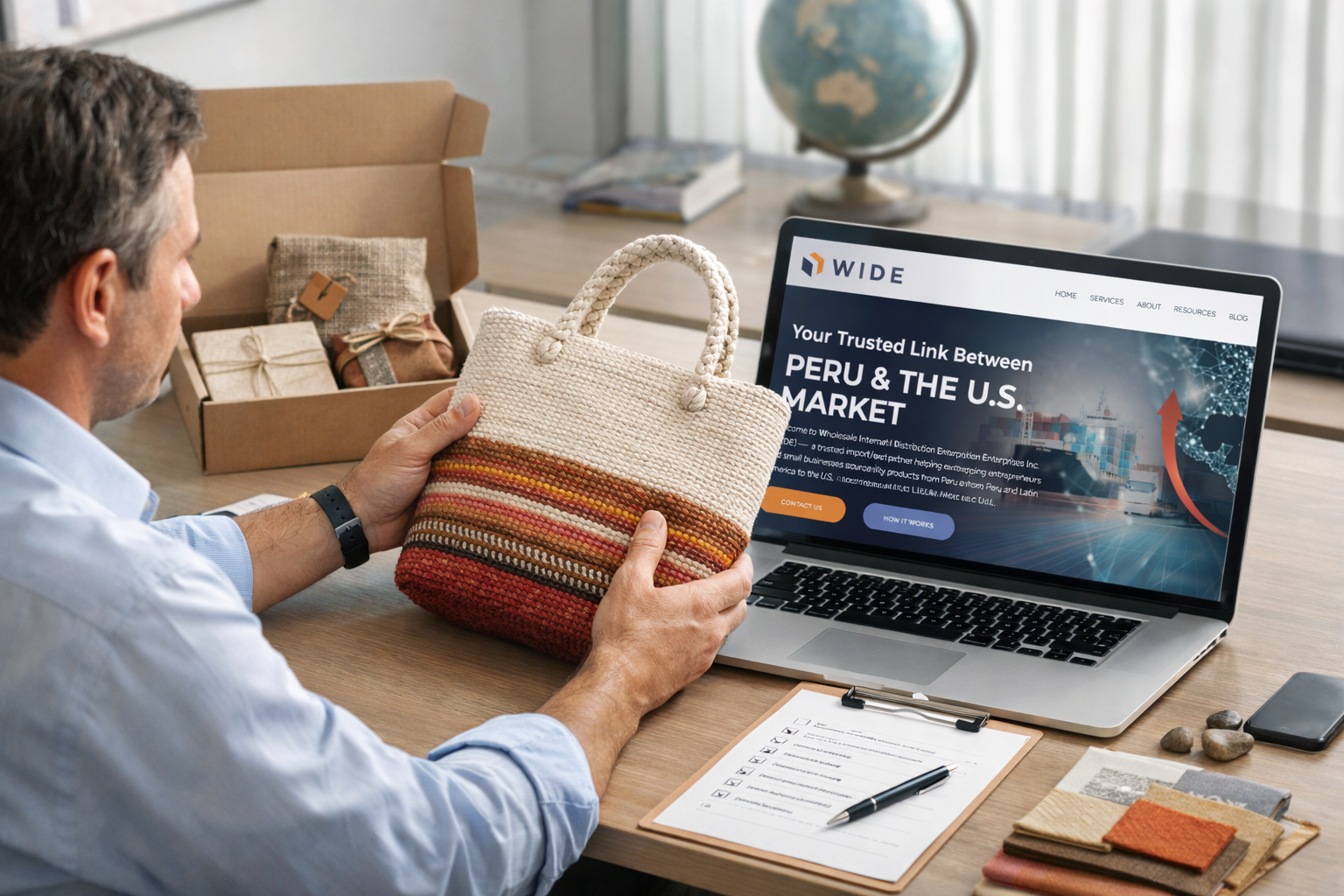
Samples can help U.S. businesses make a more informed decision before placing a bulk order with a supplier in Peru. As an early validation step, a sample allows the buyer to compare the actual item against agreed specifications, packaging expectations, and commercial needs before production scales. Used properly, samples can improve alignment, reduce misunderstandings, and support a more controlled approval process. They should, however, be used alongside supplier due diligence and product-specific compliance review, not as a substitute for them.
Why samples matter before production approval
In formal procurement environments, “first article” approval is used to confirm that an item meets required performance characteristics, technical requirements, and testing expectations before broader production moves forward. In commercial sourcing, a sample can play a similar role: it gives the buyer a practical opportunity to verify whether the product received matches what was discussed before committing to a larger order.
This is especially relevant in custom sourcing from Peru when an order involves specific materials, finishes, packaging formats, presentations, or other buyer-defined requirements. In those cases, a sample can help convert assumptions into a more structured review process before the order moves into full production.
What U.S. businesses should review in a sample
A sample should be reviewed as a decision tool, not simply as a courtesy step. The first question is whether the product matches the agreed specifications. That includes dimensions, finish, texture, color, consistency, presentation, and any other characteristic that affects how the item will be used, sold, or represented in the U.S. market. A sample review is most useful when those criteria have been defined clearly before evaluation begins.
The second area to review is packaging. The buyer should assess whether the packaging protects the product appropriately, supports the intended presentation, and is consistent with the commercial use of the item. Where relevant, the sample stage can also help identify whether packaging or presentation still needs refinement before production approval. That point matters because shipping and customs documentation often rely on accurate, consistent product and shipment information.
The third area is labeling and import readiness. For products entering the United States, cargo descriptions should be clear, plain-language, and detailed enough for CBP to identify the merchandise, and foreign-origin goods generally must be marked with the English name of the country of origin unless an exception applies. A sample review can therefore help the buyer spot issues in presentation, description, or origin-marking readiness before a larger shipment is prepared.
What the sample process can indicate about supplier readiness
A sample does not fully prove long-term supplier performance, but it can help indicate whether the supplier understood the instructions, reflected the requested specifications, and handled revisions with reasonable clarity. These are useful operational signals, especially in custom sourcing, where misalignment often appears first in details rather than in price quotes alone.
For U.S. companies sourcing from Peru, those observations should be paired with due diligence on the supplier itself. Samples help evaluate the product; due diligence helps evaluate the business relationship behind it.
How sample feedback can support a better bulk-order decision
The value of a sample is not only in receiving it, but in documenting the review clearly. After evaluating the sample, the buyer should be in a better position to approve the product, request revisions, compare an alternative, or pause the process until gaps are resolved. A written review helps reduce ambiguity and gives both sides a clearer basis for the next step.
When feedback is specific, the bulk-order decision becomes more reliable. Expectations are clearer, approval criteria are easier to define, and the sourcing process becomes more structured. That does not eliminate risk completely, but it can reduce uncertainty before the business commits to a larger purchase.
Important limitation
A sample review should not be treated as a substitute for product-specific compliance, required certifications, or shipping documentation. Depending on the product and destination, additional documents may still be needed for customs clearance, applicable standards, safety, health requirements, or pre-shipment inspection. For that reason, it is best to confirm all required documentation early in the process to avoid delays or compliance issues later.
Final Thoughts
In custom sourcing from Peru, samples can be a practical way to validate product expectations before a bulk order is placed. They help the buyer review the item more concretely, identify mismatches earlier, and make a more informed approval decision. Used together with supplier due diligence and documentation planning, the sample stage can support a more organized sourcing process from the start.
If your company is exploring custom sourcing from Peru and wants a more structured process before placing a bulk order, Wide can help you evaluate suppliers, coordinate communication, review samples, and organize the sourcing process from the start.