
Bulk Products From Peru: What Should U.S. Businesses Clarify for Processing or Resale?
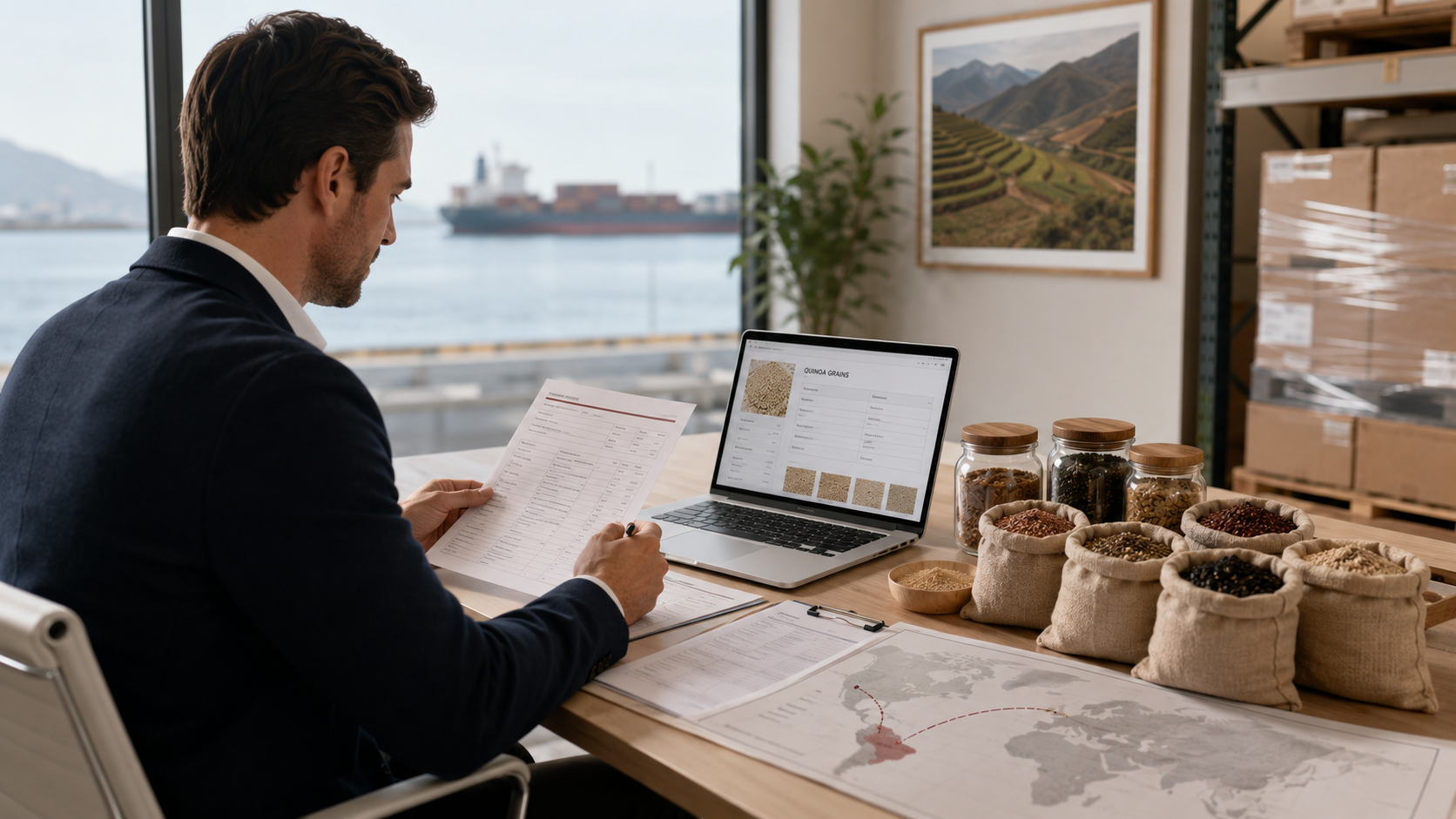
Bulk products from Peru should be sourced with a clear understanding of how the goods will be used after they arrive in the United States.
When a U.S. business starts custom sourcing from Peru or Latin America, the first conversation should not only focus on the product name. The business should also clarify whether the product is being sourced for processing, resale, production, distribution, or another commercial use.
This article focuses specifically on bulk products from Peru for processing or resale. It is not a general raw materials article, a packaging and labeling article, a supplier comparison guide, or a final delivery checklist. Instead, it explains what businesses should clarify when sourcing bulk natural ingredients, industrial inputs, specialty commodities, or other bulk goods that need to move from supplier research to import planning and final U.S. delivery.
Why Intended Use Matters When Sourcing Bulk Products
Intended use helps define the sourcing conversation.
A bulk product intended for processing may require different information than a bulk product intended for resale. A business using a product as an input may need to focus on specifications, consistency, quantity, preparation, and supplier reliability. A business planning to resell the product may need to think more carefully about product details, quantity expectations, documentation, delivery destination, and how the product will move through its commercial path.
Both cases require clarity before supplier research begins.
If the business only asks for a general product without explaining how it will be used, the sourcing request may remain too broad. The supplier or sourcing partner may need more information about the product type, specifications, estimated quantity, timeline, and final U.S. destination before the request can be reviewed clearly.
Clarifying intended use early helps move the conversation from a general idea to a practical sourcing request. It gives the business a better starting point for evaluating supplier options, import requirements, logistics planning, and delivery coordination.
What Businesses Should Clarify Before Supplier Research
Before supplier research begins, the business should organize the product information that will guide the sourcing path.
The most important details include the product type, preferred specifications, estimated quantity, intended use, preferred timeline, supplier expectations, and final U.S. destination. These details help define what kind of supplier options should be reviewed and what questions may need attention before moving forward.
For example, a business sourcing a bulk natural ingredient may need to clarify whether the product will be used in production, repackaged, distributed, or sold as part of a larger product offering. A business sourcing an industrial input may need to clarify the quantity, specifications, and timing needed to support its operation. A business sourcing a specialty commodity may need to understand whether the product can fit its sourcing, import, and delivery plan.
This does not mean every answer must be final from the beginning. In many cases, custom sourcing helps refine the request. However, the business should provide enough information to make supplier research more focused and practical.
A clearer sourcing request helps reduce assumptions. It also helps connect the product need with the broader import process from Peru or Latin America to the United States.
How Bulk Product Details Connect With Import Planning
Bulk product sourcing should not be separated from import planning.
Once a supplier option is identified, the business still needs to understand how the goods may move from Peru or Latin America to the United States. That process may involve shipping documents, customs-related review, logistics and freight coordination, bilingual communication, and U.S. distribution and delivery.
This is why product details matter early. Product descriptions, quantities, supplier information, timing, and final destination details can all affect how the shipment should be reviewed and coordinated.
A product may be available from a supplier, but the business still needs to understand whether the sourcing option fits the practical import path. The product should be reviewed not only as something to buy, but as something that must be prepared, documented, shipped, cleared, and delivered to the correct U.S. destination.
A stronger approach connects supplier research with the next operational steps. This helps the business understand what needs to be confirmed before the product moves too far ahead in the import process.
Why Documentation and Compliance Should Be Considered Early
Documentation and customs-related questions should be considered before bulk products are ready to ship.
When importing goods from Peru or Latin America to the United States, businesses may need to review shipping documents, product descriptions, quantities, supplier details, HS codes, duties, import regulations, and U.S. import compliance standards.
For bulk products, this matters because the product information provided during sourcing may later support documentation, customs-related review, logistics coordination, and delivery planning. If the product description, quantity, or supplier information is unclear, the process can become harder to follow in later stages.
The business should avoid treating documentation as a separate step that only matters after the product has already been sourced. Product information, supplier details, import considerations, and delivery planning should stay connected from the beginning.
The goal is not for the business owner to manage every compliance detail alone. The goal is to clarify the right information early so the import process can move forward with fewer communication gaps.
How Logistics and U.S. Delivery Fit Into the Sourcing Conversation
Bulk products from Peru should be sourced with the final U.S. destination in mind.
A business may need delivery to its own location, a warehouse, a fulfillment partner, or a 3PL provider. The destination can affect delivery coordination, shipment updates, timing expectations, and how the business prepares to receive the goods.
For that reason, delivery should not be treated as a last-minute detail. The business should clarify where the goods need to arrive, who should receive delivery-related updates, and whether the destination affects how the shipment should be coordinated after arrival in the United States.
This helps connect custom sourcing from Peru with logistics and freight coordination, customs and import compliance, bilingual communication, and U.S. distribution and delivery. It also helps the business understand how early sourcing decisions can shape later stages of the import process.
A clearer delivery destination gives the import path more structure. It allows the business to think beyond supplier research and understand how the product will move toward the location where it needs to be received.
Why Bilingual Support Helps Keep Product Details Clear
Bilingual support can help when product specifications, quantities, supplier details, documentation questions, and delivery expectations move between English-speaking and Spanish-speaking partners.
A U.S.-based business may explain its product needs, intended use, quantity expectations, or final delivery destination in English. A supplier in Peru or Latin America may provide product information, availability details, preparation updates, or timing in Spanish.
If those details are not communicated clearly, the sourcing request can become harder to evaluate. The business may think one detail has been confirmed while the supplier is working from a different understanding.
Clear bilingual communication helps reduce confusion around product specifications, quantities, timelines, shipping documents, customs-related questions, and delivery planning. It also helps the business understand what has been confirmed, what still needs review, and which details should be clarified before moving forward.
For first-time importers, small businesses, entrepreneurs, resellers, and growing brands, this kind of support can make the sourcing process easier to follow from supplier research to final U.S. delivery.
Final Thoughts
Bulk products from Peru should be sourced with a clear understanding of intended use, product specifications, quantity expectations, documentation needs, logistics requirements, and final U.S. delivery.
Before moving forward, U.S. businesses should clarify what product they need, how it will be used, what specifications matter, what quantity they are considering, what supplier information is needed, and where the goods should arrive in the United States.
This preparation helps connect custom sourcing from Peru with supplier research, logistics and freight coordination, customs and import compliance, bilingual communication, and U.S. distribution and delivery.
When bulk products are sourced with processing or resale in mind, the business can move forward with fewer assumptions and a clearer path from supplier research to final delivery in the United States.
If your business is sourcing bulk products, raw materials, bulk natural ingredients, industrial inputs, specialty commodities, or general merchandise from Peru or Latin America, WIDE can help you organize the process with more clarity.
Contact WIDE to discuss your product request, intended use, specifications, quantity expectations, supplier needs, documentation questions, logistics requirements, bilingual communication needs, and final U.S. delivery destination. Our team can help connect your sourcing request with a clearer import path from Peru or Latin America to the United States.