
How to Compare Suppliers in Custom Sourcing from Peru Before Placing an Order
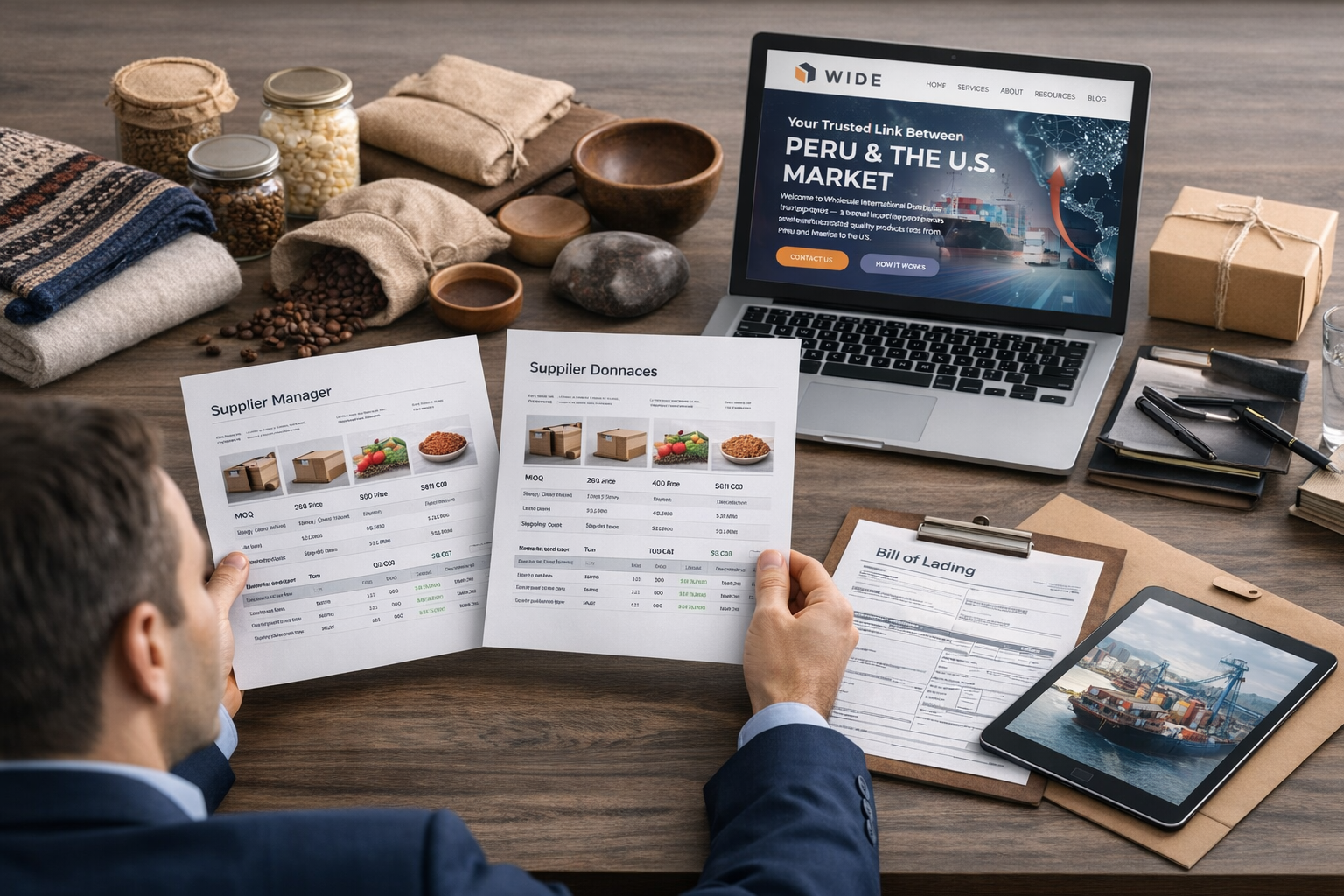
For U.S. businesses, sourcing from Peru can create significant opportunities across various product categories, including food products, raw materials, textiles, artisanal goods, and general merchandise. However, in many cases, the biggest risk does not begin after the shipment has moved. It begins earlier, when a business chooses a supplier too quickly or compares options with too little structure. In custom sourcing from Peru, that decision can affect product quality, communication, timelines, and overall execution long before the order is ready to ship.
That is why supplier comparison should be treated as a strategic part of the sourcing process, not as a simple purchasing step. A competitive quote may look attractive at first, but a successful sourcing decision usually depends on much more than price. The right supplier should not only be able to offer the product. They should also be able to support the commercial and operational expectations behind the order.
Why supplier comparison matters in custom sourcing from Peru?
In custom sourcing from Peru, supplier comparison matters because businesses are often not looking for a generic product alone. They may need specific standards for quality, packaging, labeling, presentation, production timing, or export coordination. That changes the decision completely. The question is no longer just whether a supplier can provide a product, but whether they can support the process around that product in a reliable way.
A supplier may seem like a good fit at first contact, but the real difference often appears in execution. Some suppliers communicate clearly, confirm details early, and adapt well to commercial requirements. Others may offer the right product but struggle with consistency, follow-through, or operational readiness. Comparing suppliers carefully helps businesses identify those differences before committing to an order.
For U.S. buyers, this matters even more because distance, language, and export coordination can add complexity. A stronger comparison process creates better visibility before money, production, and timelines are already in motion.
What U.S. businesses should check before placing an order?
Before moving forward with a supplier, businesses should evaluate more than product availability and price. Product fit is one of the first priorities. The supplier should be able to meet the required specifications, expected quality level, packaging needs, and any other commercial conditions tied to the order.
Communication should also be evaluated early. Is the supplier responsive? Do they answer clearly? Do they confirm key details instead of leaving them open to interpretation? A supplier may have the right product, but if communication is inconsistent or vague, the sourcing process can become harder to manage very quickly.
Production readiness is another important area. Businesses should look at whether lead times seem realistic, whether the supplier appears able to handle the required volume, and whether the process looks stable enough to support repeat orders or future scaling. Export readiness also matters. A supplier may perform well on the production side but be less prepared when documentation, timing, packaging, or coordination for international shipment become part of the process.
The goal is to understand not only whether the supplier can produce the order, but whether they can support the order in a way that fits the buyer’s real business needs.
Red flags that can signal a weak supplier fit
Some warning signs appear early, but they are easy to overlook when a buyer is focused mainly on cost or speed. One of the most common red flags is choosing a supplier based mostly on price. A lower quote may seem like an advantage, but if it comes with weak coordination, unclear communication, or unstable execution, the total cost of the decision can rise quickly.
Another red flag is when expectations are not clearly aligned before the order moves forward. If product specifications, packaging details, lead times, or deliverables are still vague, the business may be setting itself up for preventable problems later. These issues often show up as quality mismatches, delays, or confusion between what was requested and what is actually delivered.
There is also a more subtle risk: assuming that a supplier who understands the product automatically understands the expectations of a U.S. buyer. That is not always the case. A stronger sourcing process depends on making requirements explicit, validating fit early, and treating unclear signals as a reason to pause and verify, not rush ahead.
How the right sourcing partner improves supplier selection?
This is where the right sourcing partner can add real value. For many businesses, the challenge is not only finding possible suppliers in Peru. It is comparing them with more structure, validating fit more carefully, and reducing the risk of choosing a supplier who is not fully aligned with the order.
A strong sourcing partner helps businesses move beyond surface-level comparison. Instead of relying only on a quote, a product list, or a first conversation, the buyer gains more clarity around supplier fit, communication quality, production readiness, and process alignment. That makes the sourcing decision less reactive and more strategic.
This is also where Wide fits naturally into the process. For companies using custom sourcing from Peru, Wide helps connect supplier coordination, bilingual communication, sourcing support, and logistics alignment so that supplier selection is handled with more clarity from the start. That support helps businesses reduce friction between Peru and the U.S. market and move forward with a sourcing process that is more organized, more transparent, and better aligned with the real goals behind the order.
Final Thoughts
Custom sourcing from Peru does not begin with freight or final delivery. It begins with how suppliers are compared, how expectations are clarified, and how decisions are made before the order is placed.
For U.S. businesses, choosing the right supplier is not only about finding product availability. It is about building a sourcing process that supports consistency, clearer communication, and stronger execution over time. When supplier comparison is handled with more structure, businesses are in a better position to reduce risk and move forward with greater confidence.
If your business is exploring custom sourcing from Peru, Wide can help you build a more organized supplier selection process from the start. From supplier coordination and bilingual communication to sourcing support and logistics alignment, our team helps U.S. businesses move forward with greater clarity and confidence.