
Customs and Import Compliance: What U.S. Businesses Should Check Before Importing From Peru
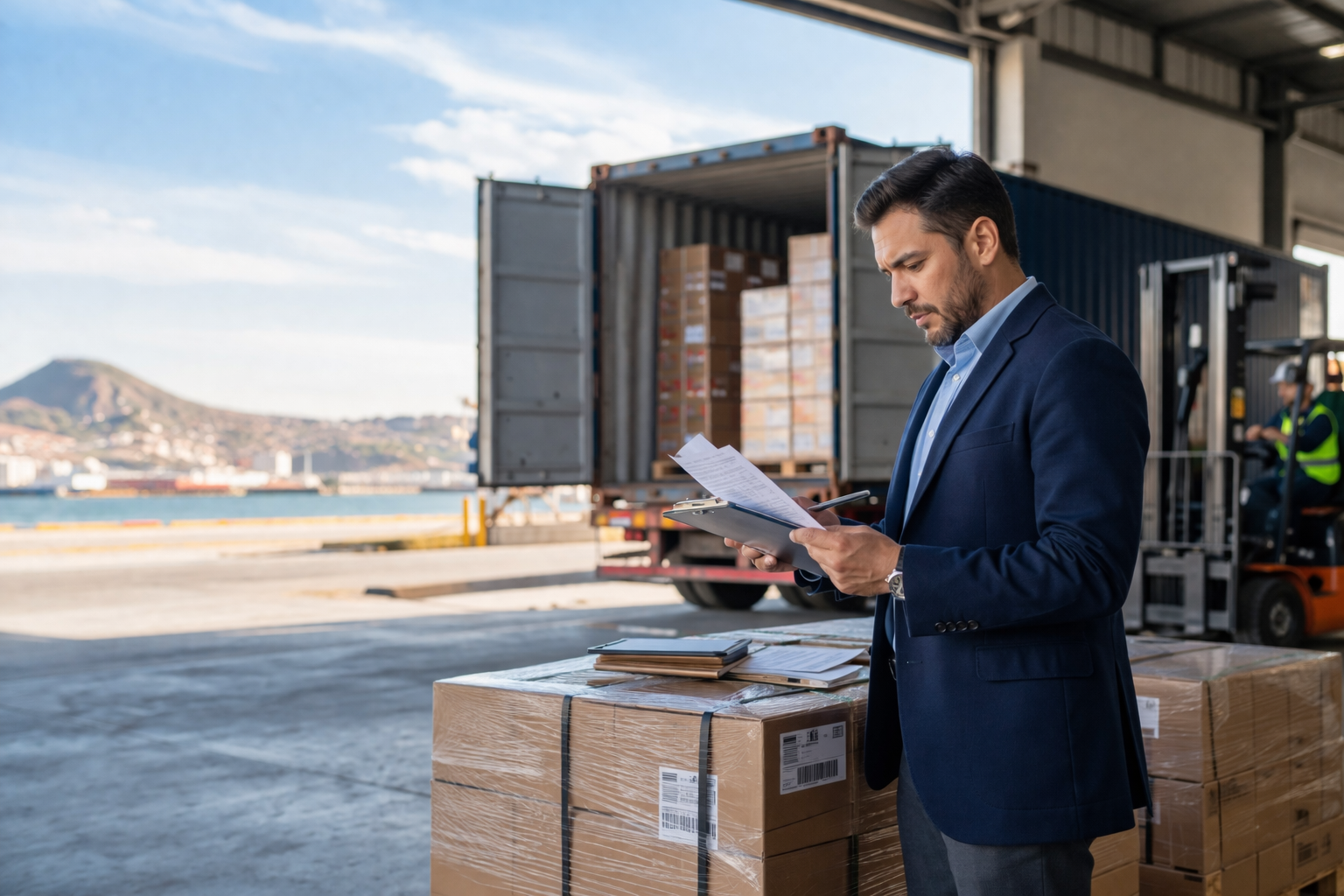
Importing from Peru can open strong opportunities for U.S. businesses, whether the goal is to source specialized products, diversify suppliers, or build a more competitive supply chain. But one of the fastest ways for a promising shipment to become a costly headache is to underestimate customs and import compliance. Delays, document corrections, and product-specific issues often do not begin at the port. They begin earlier, when shipment details are incomplete, supplier documents do not align, or regulatory requirements are not reviewed in time. CBP states that the importer of record is responsible for using reasonable care when entering, classifying, and valuing imported merchandise, which is why compliance needs to be built into the process from the start.
For companies importing from Peru to the U.S., the smartest approach is not to treat compliance as final paperwork. It is to treat it as part of supplier coordination, shipment planning, and risk control. When businesses do that early, they put themselves in a much better position to move goods with fewer surprises and better operational visibility.
Why customs and import compliance starts before the shipment moves
A common misconception is that customs compliance begins when goods arrive in the United States. In practice, key compliance issues are shaped before departure, because the entry process depends on accurate information about the merchandise, its value, its quantity, and its tariff classification. U.S. customs regulations require that the commercial invoice or other acceptable documentation be furnished with the entry and include an adequate description of the merchandise, the quantities, the values or approximate values, and the appropriate eight-digit HTSUS subheading.
That matters because vague descriptions, inconsistent values, or incomplete data can create friction later in the process. What looks like a small documentation gap at origin can become a delay, a correction request, or a preventable cost once the shipment reaches the U.S. border. For that reason, businesses should review core shipment information before cargo leaves Peru, not after it is already in transit.
The documents and product details that deserve the most attention
At a practical level, good customs and import compliance starts with clear and consistent shipment information. The product should be described accurately, commercial values should make sense, quantities should match across documents, and the tariff classification should be reviewed carefully. When those elements are weak, the entry process becomes harder to manage and more exposed to avoidable questions.
This is especially important because not every product follows the same compliance path. Food products, for example, fall under FDA requirements. FDA states that importers of food products intended for U.S. interstate commerce are responsible for ensuring the products are safe, sanitary, and labeled according to U.S. requirements. FDA also explains that foods may be imported without prior FDA sanction as long as the facilities that produce, store, or otherwise handle the products are registered with FDA and prior notice of incoming shipments is provided. Imported food products are also subject to FDA inspection when offered for import at U.S. ports of entry.
Plant and plant-based products can bring a different layer of review. APHIS states that it regulates the importation of plants, plant products, and other items that could introduce plant pests into the United States, including seeds, fruits and vegetables, timber, cotton, and cut flowers. It also notes that requirements vary depending on the commodity and the country of origin, and that some regulated items may require permits or specific import conditions.
Common mistakes that create delays and extra costs
Many import problems do not come from one major mistake. They come from a chain of smaller errors that could have been addressed earlier. Common examples include relying on broad product descriptions, assuming supplier paperwork is already sufficient for U.S. entry, failing to review classification carefully, or not checking whether FDA or APHIS requirements may apply to the shipment. Because the importer of record carries responsibility for reasonable care, these issues can quickly become operational and financial problems.
Another frequent issue is treating compliance as separate from sourcing and logistics. In reality, these pieces are connected. If sourcing is handled without enough product detail, or if logistics moves forward before the documentation is aligned, the business ends up reacting to problems instead of preventing them. A smoother import process usually depends on getting the commercial, documentary, and operational sides working together before the shipment reaches the border.
Why the right partner helps reduce import risk
This is where the right partner can make a real difference. Importing from Peru to the U.S. is not only about finding a supplier or booking freight. It is also about making sure the shipment is supported by the right information, the right coordination, and the right timing. When product details are reviewed early, documents are organized clearly, and communication between parties is more structured, businesses can reduce friction and move with greater confidence. The official requirements still depend on the product and the agencies involved, but early coordination makes the process easier to manage.
For Wide, that is an important part of the value proposition. A business importing from Peru often needs more than transport support. It needs sourcing coordination, clearer communication with suppliers, bilingual follow-through, and a more organized path from origin to U.S. entry. That kind of support helps reduce preventable mistakes and gives the importer better visibility before the shipment becomes urgent.
Final Thoughts
Customs and import compliance should not be seen as a final checkpoint. It is part of the business decision behind every shipment. The earlier a company reviews product details, documentation, and product-specific requirements, the better positioned it is to avoid delays, reduce corrections, and move imports more efficiently. That is especially true when importing from Peru to the U.S., where opportunities can be strong but execution still depends on getting the operational details right.
The goal is not to make the process more complicated. It is to make it more controlled. And in cross-border operations, that control usually begins long before the shipment arrives at the port.
If your business is preparing to import products from Peru to the U.S., Wide can help you build a more organized process from the start. From sourcing coordination and supplier communication to logistics support and import planning, our team helps businesses reduce friction and move forward with greater clarity.