
Which Incoterms Should U.S. Businesses Understand When Importing from Peru to the U.S.?
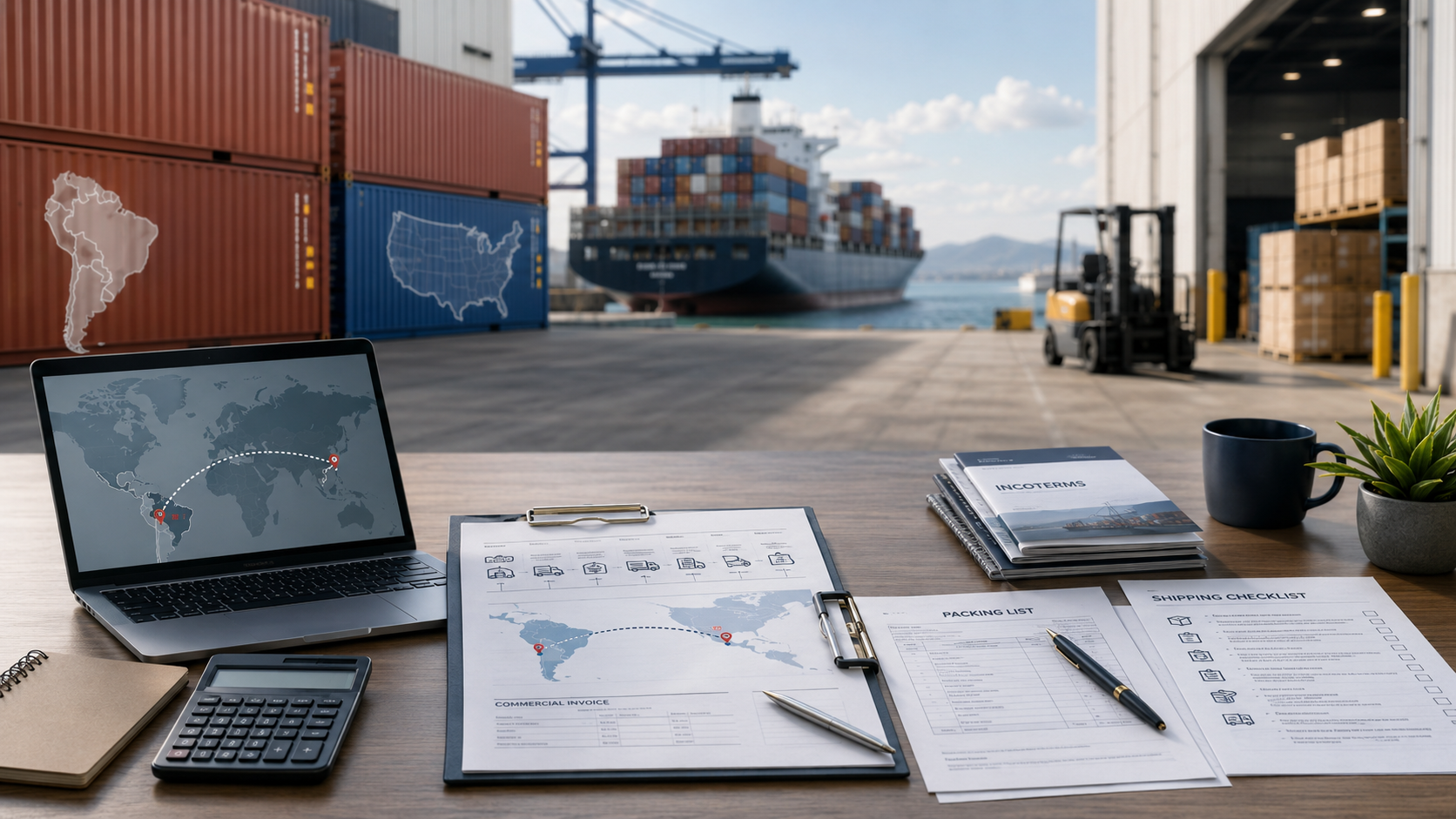
When importing from Peru to the U.S., the product price is only one part of the transaction. U.S. businesses also need to understand who is responsible for transportation, insurance, export handling, import clearance, delivery points, and risk during the movement of goods.
That is where Incoterms become important. Incoterms are internationally recognized trade terms that help define the responsibilities of buyers and sellers in cross-border transactions. They clarify who manages key tasks, who pays for certain parts of the shipment, and where responsibility shifts from one party to another.
For businesses sourcing from Peru, understanding these terms can help prevent confusion before an order moves forward.
Why Incoterms Matter When Importing from Peru to the U.S.
Incoterms help both sides of a transaction speak the same operational language. Instead of assuming that the supplier, buyer, freight partner, or importer will handle a specific step, the agreed Incoterm helps define expectations from the beginning.
This matters because importing from Peru to the U.S. involves several connected stages. Products may need to move from a supplier facility to a port, airport, warehouse, or consolidation point. From there, they may travel internationally, go through import procedures, and continue toward a final destination in the United States.
If responsibilities are not clear, businesses may face avoidable problems. A buyer may think the supplier is covering freight when that is not the case. A supplier may assume the buyer is arranging pickup earlier than expected. Documentation may also become confusing if the commercial terms do not match how the shipment is actually being handled.
Incoterms do not replace strong logistics planning, but they create a clearer starting point for coordination.
What Incoterms Can Clarify Before Placing an Order
For U.S. businesses, Incoterms can help clarify several practical questions before committing to a purchase.
The first is cost responsibility. Depending on the term used, the seller or buyer may be responsible for different parts of the transportation process. This can affect how the buyer evaluates the real landed cost of the product, not just the supplier’s quoted price.
The second is transportation responsibility. Some terms place more responsibility on the seller to arrange freight, while others require the buyer to coordinate transportation earlier in the process. This distinction matters for companies that do not yet have freight relationships or internal import experience.
The third is risk transfer. Incoterms help identify the point at which risk moves from seller to buyer. Responsibility may shift at the supplier’s location, at a port, once goods are loaded, or at another named destination, depending on the agreed term.
The fourth is documentation and customs coordination. Incoterms can help clarify which party is expected to handle certain export or import-related steps. However, U.S. businesses should still treat customs and import compliance as a separate area that requires careful attention, especially when product classification, invoice information, duties, or agency requirements may apply.
Incoterms help define commercial responsibilities, but they do not replace product-specific customs, regulatory, or legal review.
Common Mistakes Businesses Should Avoid With Incoterms
One common mistake is focusing only on the product price without asking what the quoted term includes. A lower product price may not always mean a lower total cost if the buyer must manage more freight, handling, insurance, or delivery responsibilities later.
Another mistake is using an Incoterm without naming the specific place. Incoterms usually need a named location to be useful. For example, the agreed term should make clear whether responsibility relates to a supplier facility, a port in Peru, a U.S. port, a warehouse, or another destination.
A third mistake is assuming Incoterms solve every import issue. They help define buyer and seller responsibilities, but they do not automatically determine all customs obligations, product requirements, labeling needs, or compliance steps. Importers still need to make sure the shipment is supported by accurate documentation and a clear import plan.
Finally, some businesses agree to terms they do not fully understand because they sound familiar. This can create problems later, especially when the shipment is time-sensitive, the product requires special handling, or the buyer is placing a first order with a new supplier.
How Wide Helps Create More Clarity Before Shipment
For businesses importing from Peru to the U.S., the value of support is not only in finding a supplier. It is also in making sure the commercial and logistics expectations are clear before the shipment begins.
Wide helps U.S. businesses approach sourcing and importing with more structure. That includes understanding the product need, coordinating with suppliers, supporting logistics planning, reviewing documentation requirements, and helping connect decisions made in Peru with what needs to happen once goods move toward the U.S.
This kind of coordination is especially useful for small businesses, first-time importers, growing brands, and companies that do not want to manage every operational detail alone. A clear Incoterm, combined with organized logistics and import planning, can reduce uncertainty and help the business make better purchasing decisions.
Final Thoughts
Incoterms are an important part of importing from Peru to the U.S. because they help clarify responsibilities between the buyer and seller before goods move. They can influence cost expectations, freight coordination, risk transfer, documentation planning, and the overall structure of the import process.
For U.S. businesses, the goal is not to memorize every Incoterm. The goal is to understand how the agreed term affects the transaction and to make sure the sourcing, logistics, and compliance plan are aligned before placing an order.
If your business is planning on importing from Peru to the U.S. and wants clearer support around sourcing, logistics, documentation, and shipment coordination, Wide can help you structure the process before your next order moves forward.