
Peruvian Superfoods Import: What Should U.S. Businesses Clarify Before Sourcing?
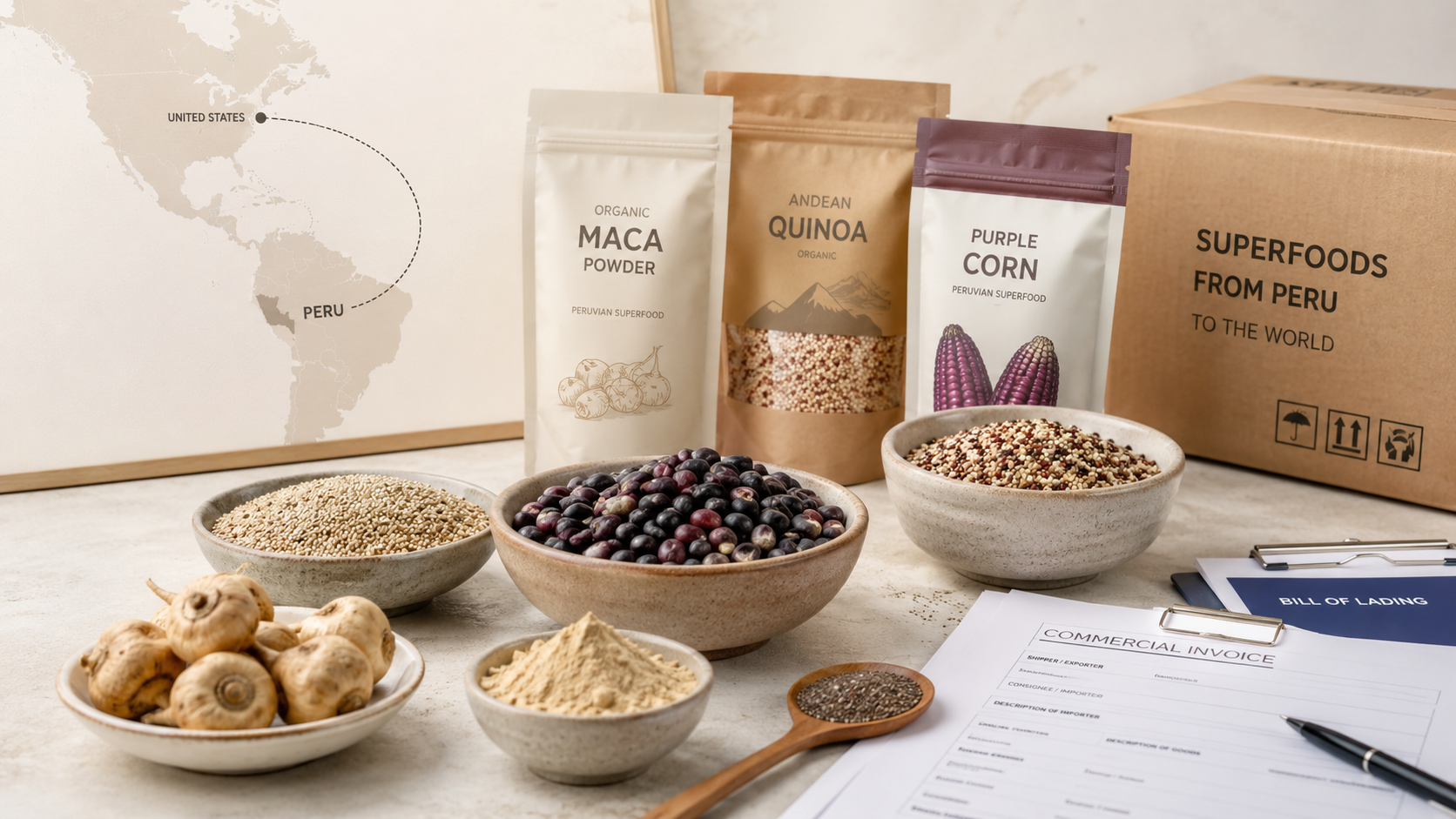
Peruvian superfoods import can be a relevant sourcing path for U.S. businesses looking for food products such as maca, quinoa, purple corn, packaged goods, native ingredients, spices, snacks, or other food-related products from Peru.
However, the sourcing conversation should not begin only with a product name. Businesses should be ready to explain what they need, how the product will be used, what specifications matter, what quantity they are considering, and where the goods need to arrive in the United States.
This article focuses specifically on what businesses should clarify before sourcing Peruvian superfoods. It is not a food import compliance checklist or a regulatory guide. Instead, it explains how to prepare the product request so sourcing, documentation, logistics, customs-related review, and U.S. delivery can be considered as part of one connected import path.
Why Peruvian Superfoods Import Should Start With a Clear Product Request
Peruvian superfoods import should begin with a clear product request.
A business may be interested in quinoa, maca, purple corn, native ingredients, packaged goods, spices, snacks, or another food-related product. But the sourcing process becomes easier to review when the company can explain what it needs beyond the general product category.
For example, a business exploring quinoa should clarify whether it is looking for bulk product, packaged product, retail-ready presentation, or an ingredient for another use. A company interested in maca, purple corn, or another Peruvian ingredient should also consider the intended use, preferred format, estimated quantity, packaging expectations, and final U.S. destination.
This level of clarity helps move the conversation from a general sourcing idea to a more practical request. It also helps connect supplier research with later steps such as pricing, lead times, shipping estimates, documentation, customs-related review, and delivery planning.
What Businesses Should Clarify Before Supplier Research Begins
Before supplier research begins, businesses should organize the information that can shape the sourcing process.
The most useful starting points include product type, product specifications, intended use, estimated quantity, preferred timeline, packaging expectations, supplier requirements, and final U.S. destination.
Product specifications are especially important for food-related sourcing. A business may need to clarify whether it wants bulk product, packaged goods, a specific presentation, a certain packaging format, or product information that may be needed later for documentation and import review.
Quantity is also important. A sample shipment, first order, recurring order, and larger commercial shipment may each require a different conversation around supplier availability, lead times, pricing, packaging, shipping estimates, and delivery planning.
The goal is not for the business owner to manage every operational detail alone. The goal is to provide enough information so the sourcing request can be reviewed with more clarity before the process moves forward.
How Superfood Sourcing Connects With Documentation and Import Planning
Peruvian superfoods import should be considered as part of the full import path, not only as a sourcing request.
Once supplier options are identified, the business still needs to understand how the goods may move from Peru or Latin America to the United States. That process may involve logistics and freight coordination, shipping documents, customs-related support, product information, packaging or labeling considerations, and final U.S. delivery planning.
Food-related products may require closer review than some other categories because product details, documentation, packaging, labeling, and import requirements can affect how the shipment should be prepared. This does not mean every product follows the same process. It means the business should provide clear product information before the shipment moves forward.
A stronger approach connects custom sourcing from Peru, customs and import compliance, logistics and freight coordination, and U.S. distribution and delivery from the beginning. This helps businesses avoid treating sourcing, shipping, documentation, and final delivery as separate decisions.
Why Final U.S. Delivery Should Be Part of the Sourcing Conversation
The final U.S. destination should be part of the conversation when planning a Peruvian superfoods import.
After the product is sourced, documented, shipped, and cleared through the import process, it still needs to arrive at the location where the business can receive, store, distribute, process, or sell it. That destination may be a warehouse, storefront, fulfillment center, business address, distributor location, or 3PL provider.
Clarifying the destination early helps connect the sourcing request with the practical reality of receiving the goods in the United States. A product going to a warehouse may require different receiving information than a shipment going to a storefront, fulfillment partner, or distributor location.
Businesses should clarify where the shipment needs to go, who will receive it, whether delivery timing matters, and whether storage or delivery coordination may be needed. This helps make the import process easier to understand before goods are already in motion.
Bilingual import support can also help when the process involves U.S.-based buyers, suppliers in Peru or Latin America, logistics contacts, customs-related partners, and receiving teams. Clear communication in English and Spanish can help keep sourcing, documentation, logistics, and final delivery better aligned.
Final Thoughts
Peruvian superfoods import can be a useful sourcing path for U.S. businesses interested in food products such as maca, quinoa, purple corn, packaged goods, native ingredients, spices, snacks, or other food-related products from Peru.
Before moving forward, businesses should clarify the product type, specifications, intended use, quantity expectations, packaging needs, supplier requirements, documentation considerations, logistics needs, and final U.S. destination.
The strongest import process connects the sourcing request with supplier research, customs and import compliance, logistics and freight coordination, bilingual communication, and U.S. distribution and delivery from the beginning. This gives businesses a clearer path from product idea to final destination in the United States.
If your business is exploring Peruvian superfoods import or wants to source food-related products from Peru or Latin America, WIDE can help you organize the process with more clarity.
Contact WIDE to discuss your product request, specifications, quantity expectations, supplier needs, import coordination questions, documentation considerations, and final U.S. delivery destination. Our bilingual team can help you build a clearer path from custom sourcing to logistics coordination, customs-related support, and final delivery in the United States.